SpO₂ Compatibility 101: Matching Sensors to Your Monitor
Learn how to prevent costly SpO₂ compatibility failures, understand protocol families, and implement best practices for reliable patient monitoring.
Read article
 USA
USA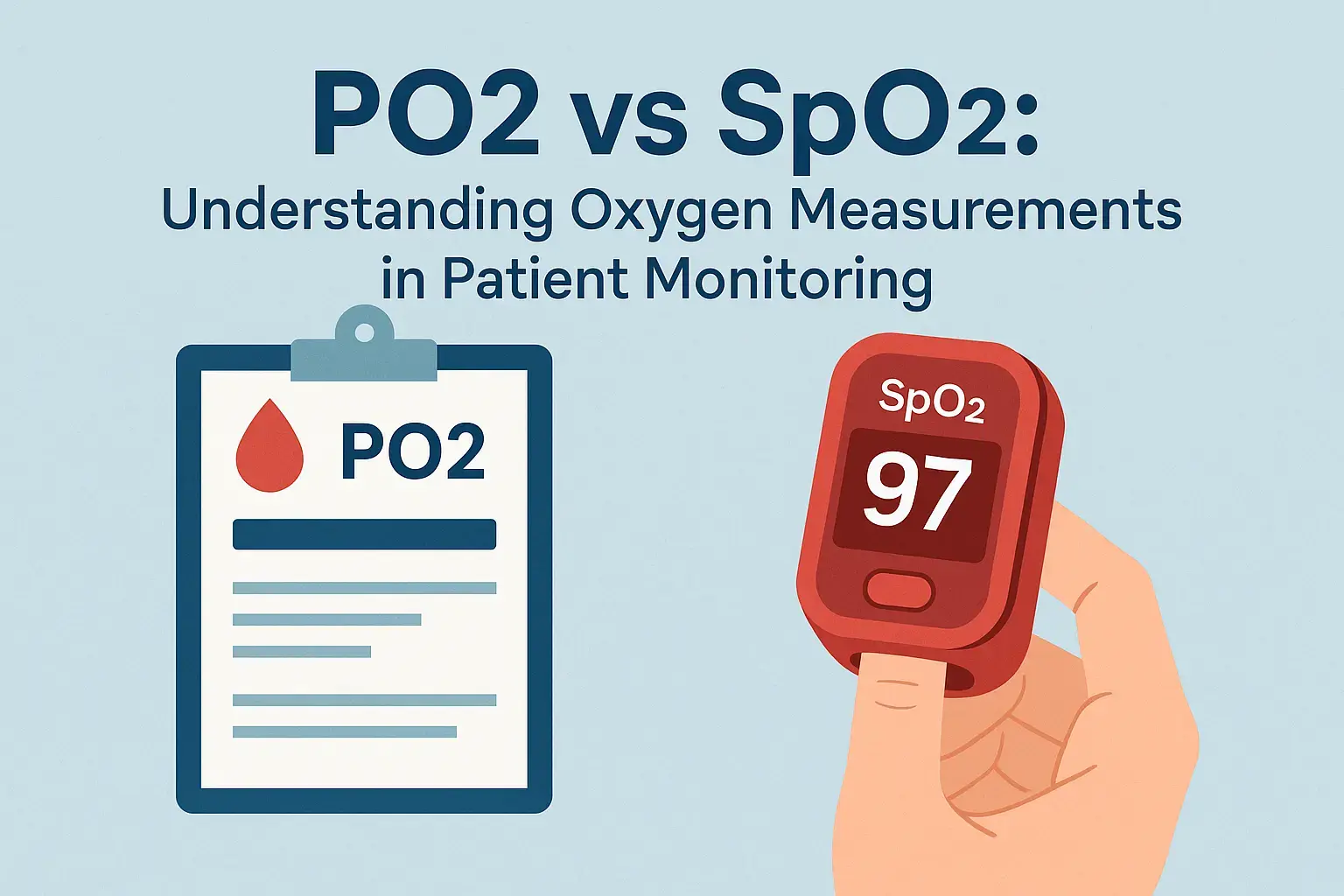
pO2 (often written PaO2) is the partial pressure of oxygen dissolved in arterial blood, measured by an arterial blood gas draw and reported in mmHg (or kPa). SpO2 is peripheral oxygen saturation — the percentage of hemoglobin carrying oxygen — measured non-invasively with a pulse oximetry sensor and reported as a percent. They describe related but different things, and they are not interchangeable — which matters the moment you're sourcing the right sensor for a monitor.
Who this is for: biomedical and clinical engineers, hospital technicians, and procurement teams sourcing oxygen-monitoring accessories — anyone who needs to turn a "pO2 monitoring" line on a purchase order into the correct, compatible part.
| Feature | pO2 / PaO2 | SpO2 |
|---|---|---|
| What it measures | Pressure of oxygen dissolved in arterial blood | Percent of hemoglobin carrying oxygen |
| How it's measured | Arterial blood gas (ABG) sample, analyzed in an analyzer | Pulse oximetry sensor on a finger, toe, or ear |
| Invasive? | Yes — arterial blood draw | No — optical, at the skin surface |
| Units | mmHg (or kPa) | % |
| Sampling | Intermittent (per draw) | Continuous, at the bedside |
| Typical accessory | Blood-gas analyzer consumables | SpO2 sensor + extension/adapter cable |
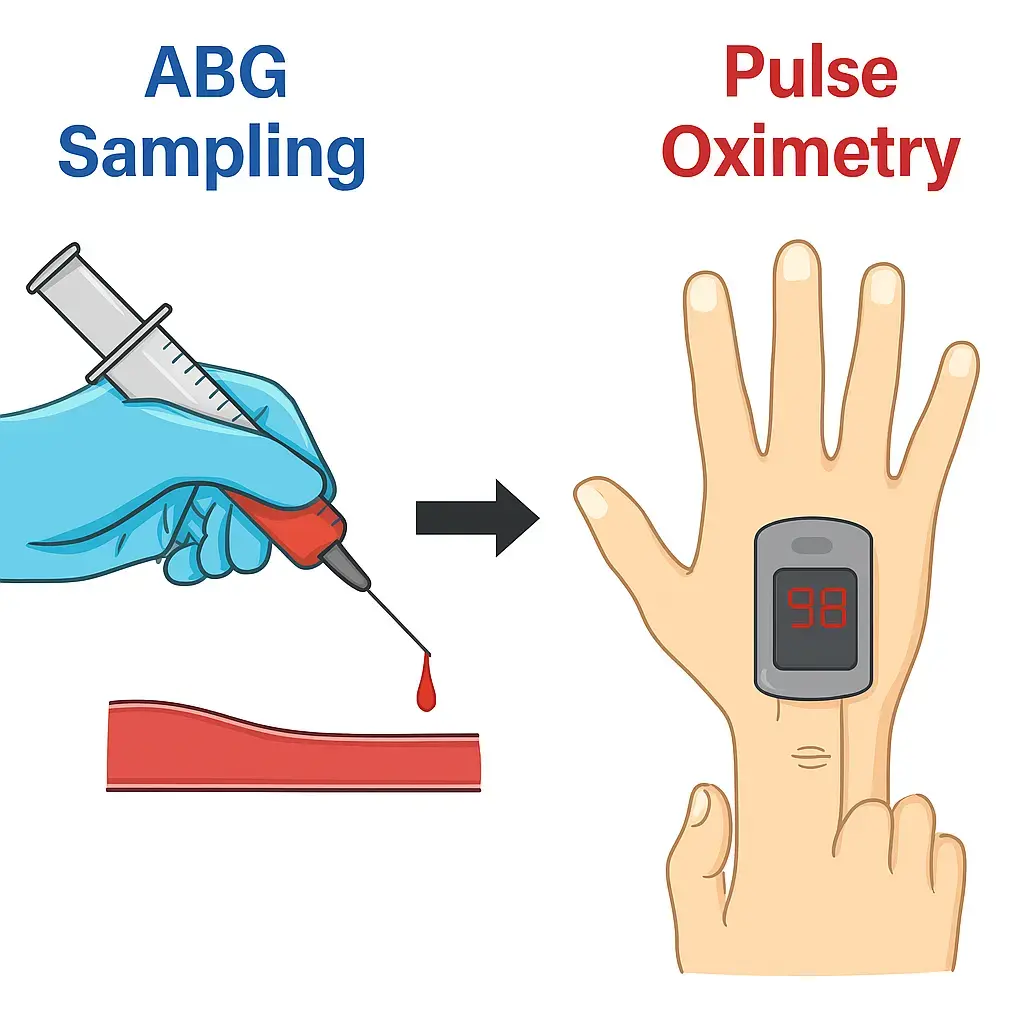
pO2 is the partial pressure of oxygen — the portion of blood-gas pressure contributed by oxygen molecules dissolved in the blood. When the sample is arterial, it's written PaO2. It's obtained from an arterial blood gas (ABG) draw and analyzed in a blood-gas analyzer, so it's an invasive, point-in-time value reported in mmHg (or kPa).12
A clinician draws an arterial sample and an analyzer reports the dissolved-oxygen pressure. Because it's a lab measurement of a drawn sample, it isn't something a bedside cable or sensor produces — a distinction that matters when a part is being sourced.1
SpO2 is peripheral oxygen saturation — the percentage of hemoglobin that is carrying oxygen — estimated non-invasively by a pulse oximetry sensor. The sensor shines light through tissue (a fingertip, toe, or ear) and reads how much is absorbed. It's continuous, reported as a percent, and it's the value the bedside monitor trends over time.32
SaO2 is arterial oxygen saturation measured directly from a blood sample; SpO2 is the pulse-oximeter's non-invasive estimate of that saturation. Same quantity, different method — the "p" flags that it came from a peripheral sensor rather than a blood draw.21
No. They answer different questions with different methods. SpO2 tells you what fraction of hemoglobin is saturated, continuously and non-invasively. PaO2 tells you the pressure of oxygen dissolved in the blood, from a single arterial sample. One is a percentage from a sensor; the other is a pressure from a lab analysis. They move together in general, but they are not substitutes.12
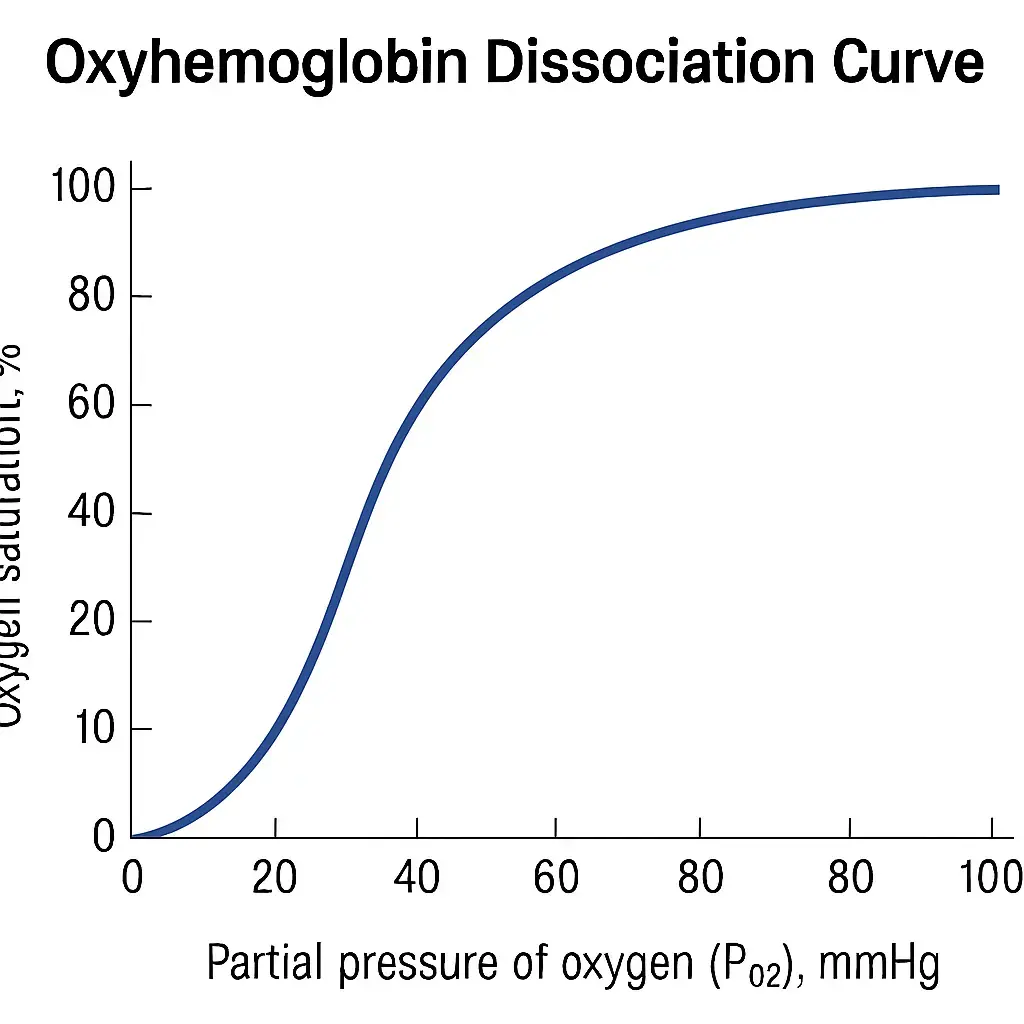
Saturation and dissolved-oxygen pressure are linked by the oxyhemoglobin dissociation curve — an S-shaped, non-linear relationship. Because the curve flattens at the top, saturation can sit high while the underlying dissolved-oxygen pressure changes, which is one reason a percentage and a pressure reading don't map one-to-one. (This is physiology background, not a rule for interpreting any individual reading.)2
Beyond the non-linear relationship above, a pulse-oximeter's reading can be pulled off the "true" saturation by factors that have nothing to do with sensor quality — which is exactly what a buyer needs to know before blaming a part. Common ones:432
The practical takeaway for sourcing: an accuracy complaint is often physiology or fit, not a defective sensor. Confirming compatibility and correct placement resolves many "the numbers look wrong" tickets before a part is ever replaced.
Purchase orders routinely conflate these terms. A line that reads "pO2 monitoring" almost always means the buyer needs SpO2 monitoring accessories — a pulse-oximetry sensor and its cable for a bedside monitor — not blood-gas analyzer parts. Quoting the literal words risks sourcing the wrong product family. Confirm the intent before you quote.
Confirm the connector / cable last: the sensor has to mate with the monitor's SpO2 input, directly or through the correct extension or adapter cable.
Match the four points above to the part, then verify: the monitor make/model, the SpO2 platform/technology, the connector, and the patient size. When those line up, the sensor is compatible. If you're unsure, share the monitor model and the existing sensor's connector and let the supplier confirm the match rather than ordering on the part number alone.
Sourcing an SpO2 sensor? See Medten's SpO2 sensor compatibility guide, SpO2 compatibility 101, and SpO2 sensors & extension cables compatibility guide, or browse the SpO2 sensors category.
This content is provided for educational and informational purposes only. It is not medical advice and should not be used as a substitute for professional clinical judgment, institutional protocols, or manufacturer instructions for use. Always follow your facility’s policies and consult qualified clinicians for patient-specific decisions.
Keep reading
More articles you may find helpful from the Medten blog.